Proof Before Paperwork: Why Your Prototype Run Is the Most Honest Audit You'll Ever Conduct
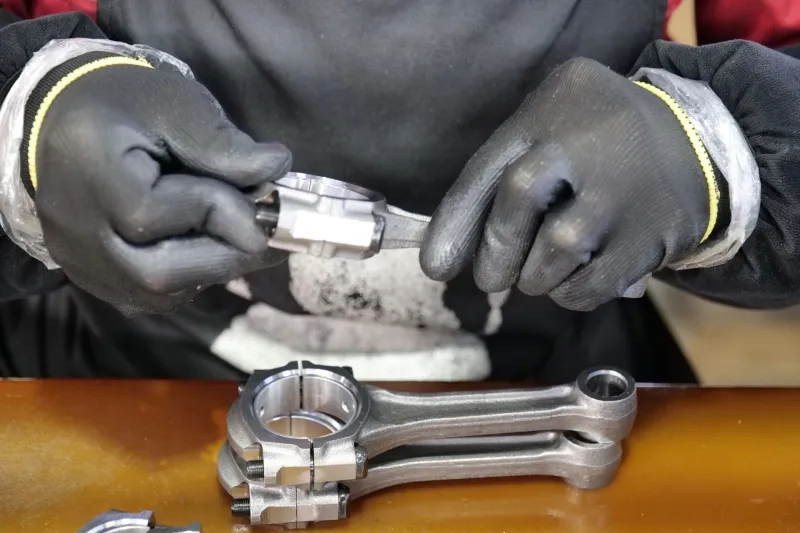
Walk into most American manufacturing companies and ask how they vetted their overseas supplier, and you'll hear about the audit trip, the certification review, the reference calls. Ask instead what happened during the first sample run, and the answer is often a shrug. That's a costly omission. The prototype phase—compressed, low-stakes on paper, and packed with decision points—is the single most revealing window into how a manufacturing partner will actually behave when your production volume and your reputation are on the line.
Why Samples Tell You More Than Site Visits
A factory tour shows you a curated version of an operation. A sample run shows you the operation's reflexes. When your drawing lands on a Chinese engineer's desk and the clock starts, every habitual behavior of that organization surfaces: how it handles ambiguity, how it communicates bad news, and whether its quality system is a living practice or a binder on a shelf.
The stakes are asymmetric, too. A failed prototype costs you a few weeks and a modest fee. A partner who hides problems during sampling will hide bigger problems during mass production—except then the tooling is paid for, the launch date is public, and your customers are waiting.
The First 48 Hours: A Communication Cadence Audit
The most diagnostic signal in early prototyping isn't dimensional—it's temporal. Track how quickly and how substantively the supplier responds once your files arrive.
A capable partner typically acknowledges receipt within hours, asks clarifying questions about the two or three genuinely ambiguous features on your drawing, and proposes a realistic sampling schedule. That's not slowness; that's engagement. Suppliers who say nothing and then deliver a sample with no questions asked are often guessing—sometimes successfully, sometimes not.
Watch specifically for:
- Question quality. Generic questions ("please confirm quantity") suggest order-taking. Technical questions about tolerance stack-ups, material finish, or mating parts suggest engineering ownership.
- Response rhythm. A partner who replies in detail on day one and goes silent for a week has a process problem. Consistency matters more than speed.
- Bad news timing. If the supplier flags a manufacturability concern early—before you've paid for anything—that's a green flag, not a red one. Suppliers who raise problems only after invoicing have their incentives misaligned with yours.
Material Substitutions: The Quiet Tell
Somewhere in most first sample runs, a material or component gets substituted. The question is never whether it happens; it's how it's disclosed.
A trustworthy partner will document the substitution, explain the reasoning (availability, cost, a spec they believe is over-toleranced), and request your written approval before proceeding. A problematic partner substitutes silently, hoping you won't notice the difference between 304 and 201 stainless steel, or between a name-brand and generic fastener, until the second or third order—when the substitution has quietly become the standard.
US buyers should require a formal substitution request process from the outset, even for samples. The supplier's reaction to that request is itself diagnostic. Resistance usually signals an operation accustomed to shortcuts.
Tolerance Handling: Where Precision Culture Shows
Every machine shop can hit a ±0.005 inch tolerance on a well-fixtured part run once. The question is whether they understand why your tolerance matters. During sampling, send one deliberately tight-tolerance feature and observe what happens.
- Partners who ask which surfaces are functionally critical, and whether a datum shift is acceptable, demonstrate manufacturing literacy.
- Partners who report "all dimensions in tolerance" without measurement data, or who provide a photo instead of a CMM report, are telling you their inspection culture is theatrical.
- Partners who flag that a tolerance may drift at volume—and propose a process change to prevent it—are the ones you want holding your production tooling.
A Practical Scoring Checklist
Use a simple weighted scorecard across two or three competing sample runs:
| Criterion | Weight | What Excellent Looks Like |
|---|---|---|
| Communication cadence | 25% | Detailed technical responses within one business day, consistent throughout |
| Question quality | 20% | Asks about function, assembly, and critical features—not just quantity and ship date |
| Substitution discipline | 20% | All deviations documented and pre-approved |
| Tolerance and inspection rigor | 20% | Dimensional reports with actual measured values, method stated |
| Schedule realism | 15% | Commits to dates it keeps, flags slippage before the deadline, not after |
Score each candidate from 1 to 5 per criterion. A partner scoring below 3.5 overall during sampling—when they are trying hardest to win your business—rarely improves after the contract is signed. The incentive gradient only runs one direction.
From Sample to Strategy
The prototype run is not a formality preceding the real relationship. It is the relationship, in miniature. US companies that treat sampling as structured due diligence—scored, documented, and compared—consistently avoid the downstream failures that consume their peers: silent substitutions, slipping lead times, and quality disputes that surface only after containers have sailed.
Spend the 48 hours. Score what you see. The contract can wait a week; the wrong partner can't be fixed at any price.