Iteration Without Regressions: Structuring the Revision Cycle So Version Three Beats Version One
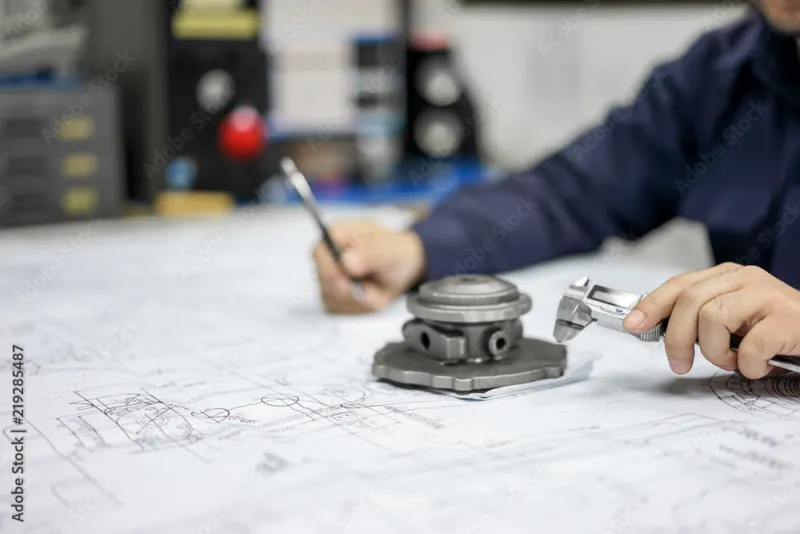
Photo: engineer inspecting prototype parts with calipers on workbench, via as1.ftcdn.net
There is a failure mode in overseas product development that almost nobody puts on a slide: the second sample that arrives worse than the first. The revision fixed the wall thickness you complained about — and in the process, the draft angle changed, a snap feature moved two millimeters, and the surface finish that was fine on sample one now shows tool marks. You paid for progress and received churn.
This is not bad luck, and it is not necessarily incompetence. It is the predictable result of an unstructured iteration loop. And for US companies working with precision manufacturers in Asia, the cost compounds quickly: each regression cycle adds weeks, rework fees, and in some cases new tooling charges that were never in the budget.
Why Revisions Create New Defects
When a factory receives change requests, the natural instinct — especially under cost pressure — is to make the smallest, cheapest adjustment that satisfies the note. A dimension is called out, so the machinist adjusts that dimension. Nobody re-checks the mating feature eight millimeters away, because nobody was asked to.
The problem is structural. In a first-article build, the entire process gets attention. In a revision build, attention narrows to the delta. Anything outside the delta is assumed stable — an assumption that fails every time tooling is touched, material lots change, or a process parameter is 'optimized' to accommodate the edit.
Add a translation layer and a sales intermediary, and the change note that said 'increase rib thickness for stiffness' arrives on the floor as 'make rib bigger.' The intent never made the trip.
The Change Log as a Contract
The single most effective discipline is also the simplest: a formal change log that travels with every revision. Each entry should specify the change, the reason, the affected drawings and revision level, and — critically — the verification method. 'Rib thickness increased from 1.2 to 1.8 mm per Rev C drawing; verify via CMM on ribs and adjacent boss; re-run drop test on two units.'
Without a log, the factory's memory of what changed lives in a WeChat thread. With one, you have a documented basis for re-inspection and, when disputes arise, for accountability. US buyers who treat the change log as a contractual attachment — referenced in the PO — find that revision quality improves immediately, because ambiguity is where regressions hide.
Re-Qualify the Tooling, Not Just the Part
Here is a question worth asking before approving any revision that involves tooling: was the mold or fixture re-qualified, or merely adjusted? A tool that has been welded, re-cut, or re-seated is functionally a new tool. It deserves a first-article inspection as rigorous as the original — full-dimension layout, not a spot check of the edited features.
The resistance you will encounter is usually about cost and time. A full dimensional report on sample three might add a few hundred dollars and several days. Compare that to the landed cost of discovering, after a 5,000-unit production run, that the re-cut cavity introduced flash in a location nobody inspected. The math is not close.
Full Re-Inspection on Every Sample
The instinct to inspect only the changes is understandable — it feels efficient. Resist it. Until a design is frozen, every sample should receive a complete dimensional and functional evaluation against the current drawing package. This is where a disciplined US quality team has a real advantage: a simple CMM report template, applied identically across revisions, produces a version-over-version comparison that makes regressions visible in minutes.
One practical addition: keep samples from every revision round, labeled and stored at both ends. When a discrepancy appears, the physical history shortens root-cause analysis from weeks to hours.
Freeze Discipline and the Cost of Endless Polishing
There is a mirror-image failure worth naming. Some US teams iterate endlessly — sample four, five, six — chasing marginal improvements, and each round carries the same regression risk as the first. Iteration discipline cuts both ways. Define, in advance, what 'good enough to freeze' means: which characteristics are critical, which are cosmetic, and what deviation is acceptable. Then hold yourself to it.
The companies that get version three right are not the ones with the best factories. They are the ones who managed the revision cycle as a controlled engineering process — logged, re-inspected, and re-qualified — instead of a conversation. Precision manufacturing rewards precision management. The sample that arrives better than the last one is never an accident.