Tooling Without Hostages: Custody Rights That Outlast the Program

Photo: Bernard Chimbala, CC BY-SA 4.0, via Wikimedia Commons
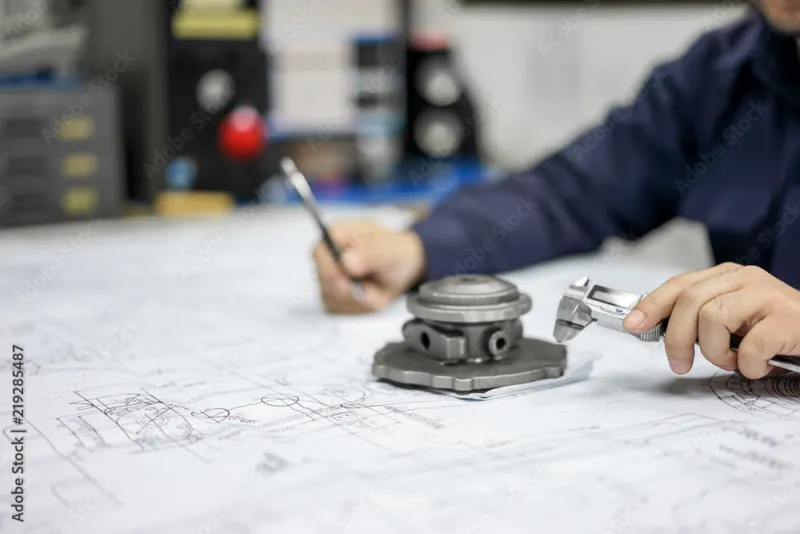
Tooling is an unusual asset. It is expensive, highly specific, and often stored at a supplier's site where the buyer rarely sees it. A mold may cost tens of thousands of dollars and remain in service for years, yet the contract governing its custody may consist of a single line in a purchase order. When a program ends, changes hands, or turns contentious, that gap becomes a liability.
The problem is not limited to ownership. A buyer may own the tool but lack practical access to it. A supplier may maintain the tool but have no obligation to document maintenance. Replacement cost may be allocated by habit rather than by agreement. Tooling custody is a lifecycle issue, and it should be managed with the same discipline as quality or delivery performance.
Tooling Is an Asset Class, Not a Line Item
Most US companies treat tooling as a prepayment or a one-time cost. In practice, it is a fixed asset with a location, a condition history, a maintenance schedule, and a residual value. That asset can outlive the product program, the supplier relationship, or both.
A useful starting point is to separate ownership from custody. The buyer may own the tool, while the supplier holds it as a bailee for manufacturing purposes. That distinction matters because custody creates obligations: care, insurance, access, maintenance, and return. If those obligations are not written down, they are resolved by negotiation when leverage is weakest.
The Custody Problem Begins Before the First Part
Tooling terms are often negotiated after the first production run, when the buyer is focused on launch and the supplier is focused on payment. That is the wrong sequence. Before the tool is built, the parties should agree on what is being made, who owns it, where it will be stored, who may use it, and how it will be returned.
For multi-cavity molds, progressive dies, and specialized fixtures, the asset register should list each tool separately. A single line item called tooling is not enough. Each tool should have a unique identifier, a description, a replacement cost, a location, and a linked part number. That register becomes the reference document for insurance, maintenance, and transfer.
A Serialized Register Is the Bare Minimum
A serialized tooling register should be updated whenever a tool is moved, modified, or replaced. It should include the date of acquisition, the original cost, the current replacement cost, the responsible party for maintenance, and the expected production life. If the supplier subcontracts any operation that uses the tool, the register should note where the tool travels and who has custody at each stage.
US buyers should request the register at least annually and compare it with physical verification. A tool that cannot be located is a tool that cannot be transferred. A tool that has been modified without documentation may no longer produce the approved part.
Maintenance Logs Turn Ownership Into Control
Ownership without maintenance visibility is a weak form of control. A mold that has been run beyond its recommended cycle count may be close to failure. A die that has been repaired repeatedly may no longer hold tolerance. The buyer should require maintenance logs that record cycle counts, cleaning, polishing, repair, and replacement of wear components.
Maintenance responsibility should be explicit. The supplier may perform routine maintenance as part of the manufacturing agreement, but the buyer should define what counts as routine, what triggers a major repair, and who approves the cost. A common failure mode is a disputed repair bill at the end of a program, when the buyer needs the tool returned and the supplier needs to recover unpaid maintenance costs.
Replacement Cost Allocation Needs a Formula
Tooling does not last forever. Wear, accident, and obsolescence all create replacement cost. The contract should state how that cost is allocated. A simple approach is to distinguish among normal wear, supplier negligence, and buyer-driven design changes. Normal wear may be built into piece price or amortized over an expected volume. Supplier negligence should be the supplier's responsibility. Buyer-driven changes should be the buyer's cost.
The formula matters less than the agreement. Without one, replacement cost becomes a negotiation at the worst possible time. A buyer who needs a tool transferred quickly may accept an inflated replacement charge simply to avoid delay.
Access Rights Should Not Depend on Goodwill
Access is the practical test of ownership. The buyer should have the right to inspect the tool on reasonable notice, to audit maintenance records, and to authorize repairs. If the tool is held by a subcontractor, the buyer should have equivalent access rights through the primary supplier.
Access rights should survive the termination of the manufacturing agreement for a defined period. That allows the buyer to verify condition, arrange transfer, or inspect the tool before it is moved. Access should not be conditioned on payment of unrelated invoices, which is how tooling hostage situations begin.
Transfer Terms Should Be Written for the Exit
The transfer clause is often the most important part of the tooling agreement because it is read when the relationship is ending. It should state the trigger events, the notice period, the condition standard, the packaging requirements, and the cost allocation for packing and shipping. It should also state that the supplier has no lien on the tool for unpaid invoices unrelated to the tool itself.
A practical transfer clause includes a timetable. For example, the supplier must make the tool available within ten business days of a written request, with a condition report and all associated fixtures, drawings, and maintenance records. The buyer should verify the tool before it leaves the supplier's site and document its condition on arrival.
Conclusion
Tooling custody is not a legal formality. It is an operating discipline that protects a valuable asset across the life of a manufacturing relationship. US buyers who serialize their tools, require maintenance records, define replacement cost allocation, and write transfer terms for the exit will avoid the most expensive form of hostage negotiation: the one that begins when the program is already over.